We like to think we see the full story, but often our snap judgments miss the mark.
Quick decisions—whether triggered by our past experience, inspired by a dazzling social media post or a punchy news headline—are rarely based on all the facts. The truth is, our minds are wired with hidden biases that shape these impressions without us even realising it. Today, let’s explore how to question our gut reactions and build a more balanced view.
The Quick Draw of Intuition
Imagine you’re walking down a busy street and see a person hastily checking their watch while frowning. Your instinct might be to assume they’re in a hurry or annoyed. Yet, what if that individual was actually excitedly anticipating a long-awaited phone call? The split-second judgement is a classic example of how System 1 thinks: our instinctive, quick-response mechanism can lead to misinterpretation.
What are the pitfalls of instinctive and quick-response mechanism?
Speed vs. Accuracy: Intuition is fast and efficient, but its speed can compromise accuracy.
Snap Judgments: Quick impressions are often based on limited information, which might not reflect the true story.
Emotional Influence: Our immediate reactions are frequently driven by emotion, making them prone to bias.
Hidden Biases That Skew Our Views
Our quick thinking is further complicated by cognitive biases—systematic errors in reasoning that shape our perceptions. Consider these familiar biases:
Anchoring: Our initial exposure to a piece of information sets the tone. Many stores, for instance, show the initial price throughout the sale season; any later markdown or “sale” price seems like a bargain, even if the final price is still hefty relative to like products.
Availability Heuristic: We judge the likelihood of events based on how easily examples come to mind. Following high-profile terrorist attacks, media coverage can lead us to believe that such events are more common than they really are, impacting decisions like travel or personal security measures.
Loss Aversion: We tend to fear losses more than we value equivalent gains, which can lead us to make overly cautious decisions. People are generally more upset about losing $10 than they are happy about gaining $10. This might result in judgements where avoiding losses comes first, surpassing any benefits and influencing everything, including corporate investments and consumer behaviour.
Hindsight Bias: After an event, we often feel that the outcome was predictable, even if it wasn’t clear beforehand. Looking back, someone could think they “should have known better” about a failed project or relationship, even if the choice made was logical given the knowledge at the time.
These biases work subtly, often without us even realising they’re in play. They influence how we interpret everything from everyday interactions to major life decisions.
Strategies to Think More Deliberately
To counter the pitfalls of rapid intuition, it’s essential to engage our slower, more analytical mode of thinking. Here are some practical strategies:
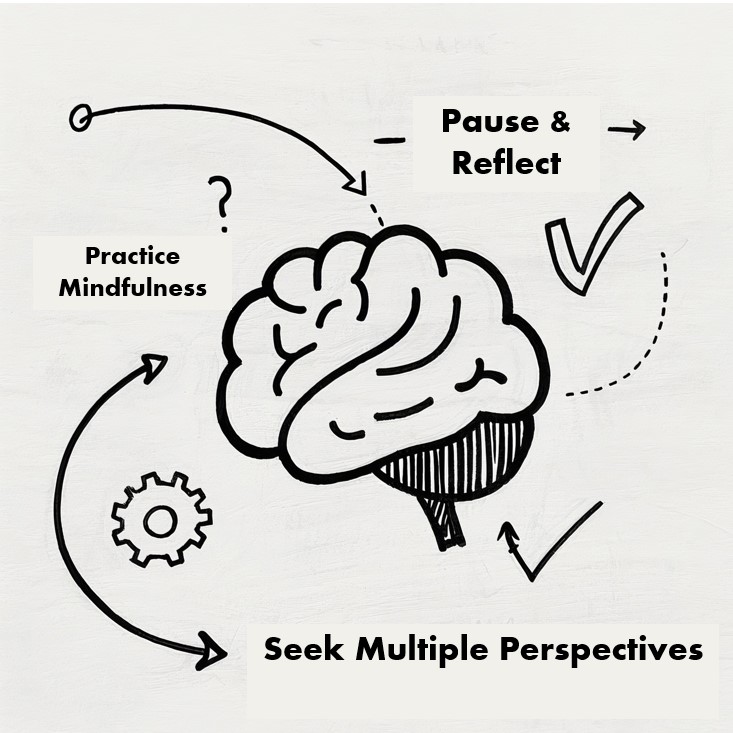
Pause and Reflect: Before reacting, take a moment to ask, “What might I be missing?” This pause can help switch you from automatic to deliberate thought.
Seek Multiple Perspectives: Avoid relying solely on your first impression. Look for additional information or ask others for their views.
Practice Mindfulness: Regular mindfulness exercises (e.g., focus on your breath, mindful walking to focus on your feet and the rhythm of your steps, or loving-kindness meditation) can help you recognise when your mind is jumping to conclusions, giving you space to choose a more thoughtful response.
Keep a Decision Journal: Writing down your decisions and the reasoning behind them can reveal patterns in your thinking over time, highlighting recurring biases that you can work on.
Conclusion
Our natural inclination to think fast can be a double-edged sword. While it allows us to navigate daily life quickly, it also opens the door to biases and misjudgments. By understanding the interplay between our intuitive and analytical minds, and by actively applying strategies to slow down and reflect, we can begin to make more balanced and informed decisions.
Have you ever caught yourself making a snap judgement that turned out to be off the mark? What strategies have helped you step back and reassess your initial impressions? Share your thoughts and experiences below—let’s learn from each other as we strive for clearer, more thoughtful decision-making.
Next up: Why smart people make poor financial decisions—and practical tips to avoid common pitfalls.


 Mind & Money Hacks
Leave a comment